
Why Material Choice Matters in Custom Game Box Manufacturing

Why Material Choice Matters in Custom Game Box Manufacturing
The first interaction players have with a game is the box. It's the very first touch they have with the game. The material defines how it feels - how thick and stiff it is. From a technical perspective, quality game boxes will be made of chipboard ranging in thickness from 1,200 to 2,400 gsm (grams per square meter). The stronger the chipboard material, the more resistant it is to compression (a force greater than 40 kg per square centimeter), and the more likely it is to keep box corners and sides standing up to long wear and tear. So when a brand has manufactured high-quality custom game boxes, the box material is not just an expense; it's an investment. This means: the game is here to stay. In this blog post, we'll explain why the choice of material is the most important consideration for game box manufacturing.
The Importance of Material Selection in Custom Game Boxes:
Long-lasting Durability for Heavy Use
We play board games a lot. They're removed from shelves, stored in closets, and shared among friends and family for many years. And this takes its toll on the box. First, the corners. Next, it's the walls that bend. And lastly, the box top no longer closes. This is known as "corner blowout" - and it occurs when either high-grade chipboard that is too flimsy is used, or low-grade chipboard is used. This is a problem that can be avoided with high-grade chipboard with thick wall reinforcements. So companies that specialise in custom luxury game boxes select a thicker grade of board, with reinforcing walls. So the box will stand up to multiple uses, keeping its shape. When it comes to a collector's shelf, this is a must.
Effect on Printing and Packaging
All the boxes are made attractive for the gamer's eye. The winning colors are bright, bold, and have artwork that really stands out. And this isn't a property of the printing. It's all about the substrate. Coated paper wraps provide a smooth surface for the ink to lie on. Linen textures add a luxurious touch. Matte coatings can be less reflective for photography and lighting displays. Shiny coatings enhance and brighten colors. When purchasing game boxes wholesale, paper wrap quality impacts the color quality of each product. Cheap wrap paper sucks up ink, resulting in poor prints and a cheap appearance
Strength to Support Heavy Piece
Today's games are filled with lots of massy things. There's all the coinage, meeples, rulebooks, and miniatures; all weigh a ton. A shallow, thin, or lightweight box just can't stand up to that weight. The bottom begins to sag. Then it buckles. Then it splits. This is not only embarrassing - it's a returns and refund nightmare. The chipboard (or even better, double-wall corrugated) inserts spread the weight of the trophy over the bottom of the box. Companies that order custom sports boxes in bulk - which may contain metal trophies, coins, or other weighty items - need to ensure their boxes are strong. That's why the right material guarantees that every box will hold up its contents from the production line to the consumer.
Green Boxing for Green Games
Today, gamers are also making conscious choices. They're buying for values as well as fun. And they want to buy from companies that are good for the environment. Luckily, the world of green manufacturing has advanced. There are now plenty of options for FSC-certified recycled paperboard that work as well - or even better - in most uses. Soy inks are now used instead of petrochemical inks, without compromising print quality. Solvent-based coatings are being replaced with water-based coatings in many factories. A responsible custom packaging boxes manufacturer will have these products. Companies using these materials also win the marketing battle with an environmentally sensitive consumer. It's good for the environment, your product, and your customers.
Different types of materials used in custom game boxe
The four most common materials used to make game boxes are:
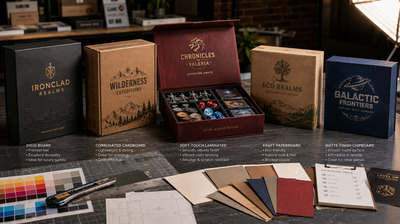
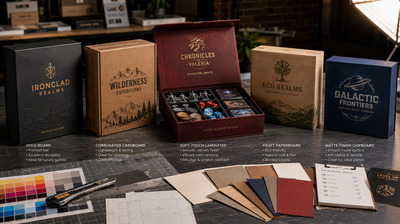
- Grey Chipboard: It's the most common packaging material used for games. This is a recycled pulp and available in several thicknesses. It is cheap, rigid, and can maintain its structure when in use. Grey chipboard is commonly used to make retail game boxes. It can also be readily printed on when wrapped with a paper sheet.
- Thick Greyboard with Paper Wrap: It's all about the upgrade. The greyboard box is made of a large piece of greyboard with a paper sheet applied to it that has been coated with a linen, matte, or gloss finish. This makes a rigid, attractive, and elegant box. This is the substrate that is used for collector and limited edition Custom Game Boxes.
- Corrugated Cardboard: Primarily used for packaging, distribution, and shipping. The inner flute cushion material aids in taking the shock of shipping. It is lightweight and yet strong.
- Kraft Paperboard: Kraft paperboard is a type of unbleached paperboard that is sustainable. It's rough and unpolished - a look that appeals to green companies. It's strong enough to pack medium-weight game components as well. Great for small game companies looking for a green packaging option.
Conclusion:
To sum up, material isn't just a minor consideration when designing game boxes. It's the bottom line. It affects the durability, aesthetics, shipping protection, and brand message of the box. So make sure you select your material before you design and price. Whether you're looking for durable everyday custom game boxes, fashionable luxury sets, cost-effective wholesale options for mass production, or high-volume sports containers to hold heavy parts, or need a manufacturing partner who can advise you on your choice of material, it begins with choosing the right material. And once you've got that right, you're on your way. If your game is great, it's worth a great box.